
Aspacytarabine (BST-236)
Innovation Built on Established Science
BioCytara’s lead development asset is Aspacytarabine (BST-236), an investigational anticancer therapy designed to improve the delivery characteristics of cytarabine.
Our development approach is based on enhancing established therapeutic mechanisms through innovative drug design and formulation strategies.

A Differentiated Cytarabine Prodrug
Aspacytarabine is an investigational antimetabolite composed of cytarabine chemically linked to the amino acid asparagine.
Cytarabine is a well-established chemotherapy agent used in the treatment of AML and other hematological malignancies.
Although cytarabine is highly active against leukemia cells, intensive treatment may be associated with significant toxicity, including neurological and gastrointestinal adverse effects.
Aspacytarabine was specifically designed to address some of these limitations.
How Aspacytarabine Works?
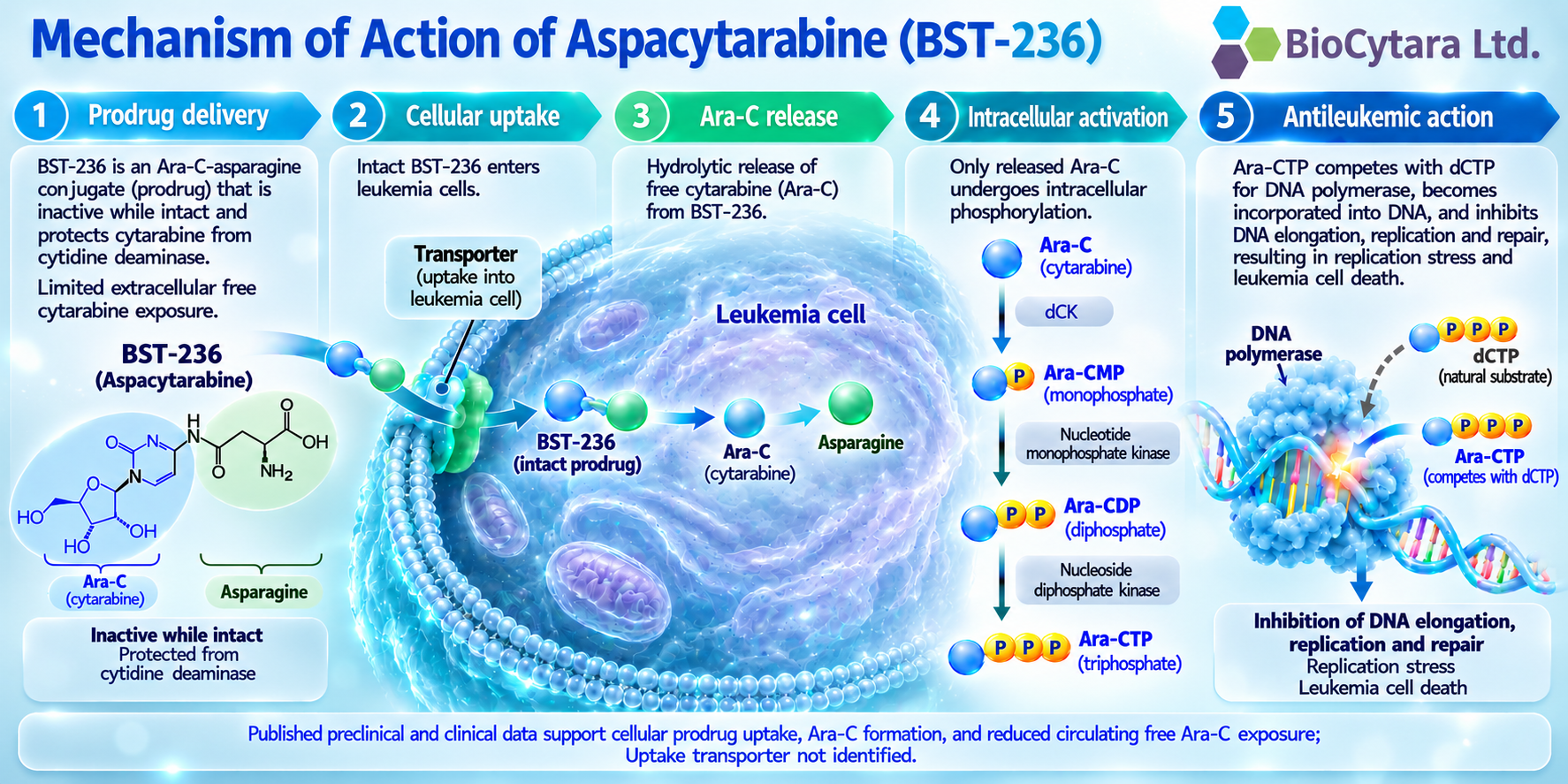
Aspacytarabine is administered intravenously as a prodrug that releases the active anticancer agent cytarabine following administration.
The intact prodrug is designed to be relatively inactive until converted to cytarabine.
This approach is intended to modify the pharmacokinetic profile of cytarabine, limiting high systemic peak concentrations that may contribute to treatment-related toxicity.
Preclinical and clinical research suggests that Aspacytarabine enable the administration of substantial cytarabine doses to patient populations who are unsuitable for conventional intensive cancer therapy.
Development Pipeline
Primary Indication: Acute Myeloid Leukemia (AML).
Additional Opportunities:
- Higher-risk Myelodysplastic Syndromes (MDS).
- Relapsed or refractory AML.
- Combination therapies.
- Future oral formulation development.
Current Development Status
Aspacytarabine has completed Phase 2b clinical evaluation as monotherapy in newly diagnosed AML patients considered unfit for intensive chemotherapy.
Additional studies have investigated its use in other R/R AML and MDS populations and in combination regimens.
Further clinical development and regulatory approvals are required before commercial use.
Aspacytarabine is an investigational product and is not yet approved for commercial treatment.
Clinical Evidence
Multi-center clinical trials (Phases 1/2a and 2b) in AML were conducted with more than 100 patients treated worldwide (EU/US/IL)
In a published Phase 2b study:
- 36.9% complete remission (CR) achieved with full hematological recovery.
- Responding patients with 79.2% overall survival (OS) in the first year.
- Median overall survival was not reached among responders within 2 years follow-up, with 66.7% OS in responding patient.
- Responding patients demonstrated hematological recovery without prolonged post-remission cytopenias.
- The treatment demonstrated a high safety profile as compared to cytarabine.